Showing posts with label Canidae. Show all posts

Monday, April 8, 2013

Camp Creature: The Gray Wolf

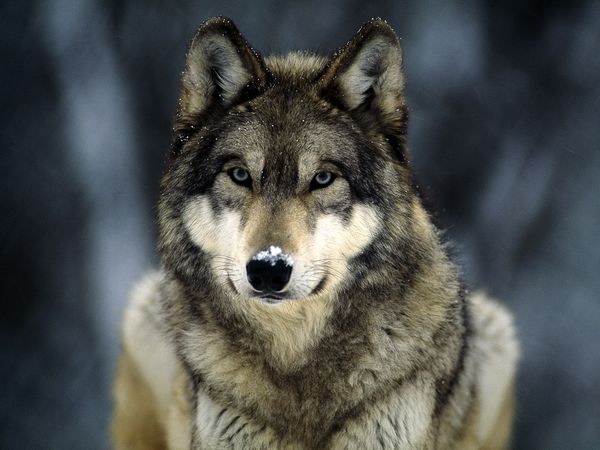
Gray wolf photo from National Geographic. 
This weeks camp creature is inspired by the Minnesota's NBA team the Timberwolves. Prior to European settlement in North America, the gray (or timber) wolf inhabited most of North America - even down through most of Mexico. Due to habitat deterioration and human persecution, wolves were almost completely eliminated from the western United States, Wisconsin and Michigan by the mid-1960s. Minnesota was the only state (aside from Alaska) that retained any wild wolves before they were placed on the endangered species list (in every state except Minnesota where it was labeled as "threatened") in the 1970s. Under this protection, it was illegal to kill a wolf, except in the defense of human life. Later the protection was broadened to defense of human life and livestock.

Gray wolf... black fur!
Gray wolves can thrive in many habitats, which makes sense considering historically they have been found as far north as Alaska and as far south as Mexico, in may different types of environments such as forests, prairies, swamps, mountains, deserts or tundra. In Minnesota, most wolves inhabit the northern, forested areas but have been spotted in the south as well. Gray wolves are the largest member of the Canidae family (that includes dog-like animals such as domesticated dogs, coyotes, foxes, etc.). Males can weigh as much as 110 pounds and measure six and a half feet long. They can be gray, black or buff with reddish coloring, or they can be all black. Wolves has rounded, relatively short ears and a large muzzle. Minnesota wolf packs generally contain about four to eight wolves, but packs in less populated areas like Canada or Alaska can reach up to 20 or 30 wolves.

Current gray wolf population.
In January 2012, wolves in the western Great Lakes, including Minnesota, were completely removed from the federal Endangered Species List. Due to this removal, Minnesota took over the management of the gray wolf, and in 2012, a limited wolf hunting season was opened. The DNR offered a few thousand hunting licenses and limited the hunt to 400 wolves across the state.  After the 2012/2013 season ended, 413 wolves had been hunted. There has been some controversy surrounding the wolf hunt in Minnesota, and there is a hearing scheduled at the Minnesota State Capitol to possibly postpone another wolf hunting season for five years. Many Minnesotans feel there needs to be more research done to determine how many gray wolves are currently living in the Minnesota wild and if a hunt is necessary.

The Minnesota DNR has a lot of  great information about the gray wolf management in Minnesota. It isn't too likely that you'll come across a wolf in the wild, but the same website explains exactly what to do if you do meet a gray wolf. Do you support the wolf hunt, or do you think Minnesota should postpone another one for five years? Let us know your thoughts!

Monday, November 12, 2012

CAMP CREATURE - The Minnesota Red Fox

The Minnesota Red Fox
Ever wonder what kind of animals roam around Camp Foley?  One of the most popular among those who frequent camp is the Minnesota Red Fox.  Several Camp Foley staffers have spotted foxes here on the grounds; most recently, near the boys’ cabins.  The foxes are particularly popular with our camp office "mascots" (dogs) Norm and Nike, who seem very interested in being let out to chase them!

While the “Red” Fox can actually be black or silver-black in color, most have a rust-colored pelt with black legs and a long, bushy white-tipped tail.  They average 15 to 16 inches in height and weigh between 8 and 15 pounds.

The Minnesota Red Fox can run up to 30 mph and jump as far as 15 feet.  They are most often seen at twilight and during the evening hours when they venture away from their dens to hunt.

Foxes have a dog-like appearance because they are members of the Canidae animal family – a group that includes dogs, wolves, and similar creatures.  While foxes tend to stay quiet to avoid detection, they can bark, yelp and make many dog-like sounds when necessary.  

A Red Fox with its prey
Unlike dogs and wolves, foxes are not pack animals.  They live and hunt alone, except for a short period of time while raising their young with a mate.  During those months, both parents venture out to hunt alone and bring their catches home to the den to feed their “pups.”  Within a year, the fox pups grow to be large and independent enough to leave the den and live on their own.

As omnivores, Red Foxes feed on rats, mice, rabbits, squirrels, birds, snakes, lizards, fish, insects, berries, nuts, and seeds.  They use their keen eyes, ears, and sense of smell to locate prey.  A fox can detect the sound of a burrowing ground squirrel or a lizard rustling through the brush, from several yards away.  But since foxes hunt alone, rather than in packs, they must often use clever cat-like tactics to track, stalk, and pounce on their prey.  These hunting techniques are believed to be the inspiration behind the old phrase, “sly as a fox.”

Foxes are one of the few predators that occasionally store food under brush or buried in the ground for use later.  While harmless to humans – a fox will usually run as soon as it sees you – they do have a few natural enemies.  Coyotes, dogs, and humans all compete for territory and hunt foxes.

At Camp Foley, our “Foxes” are our youngest camper group.  Like their animal namesakes, Foley Foxes learn valuable skills that they can continue to use throughout their lives.

What animals have you seen here at Foley?  Let us know!

(For more pictures, info, and to hear the sound of a fox barking, click these:)