Showing posts with label camp creature. Show all posts

Thursday, March 21, 2019

Camp Creature: Top 5 Highlight Reel!


One of our favorite things to post about is our featured Camp Creature. We have tons of camp creatures here living in this part of rural Minnesota, which puts us in an excellent spot to explore and see animals of all types. Today we are bringing together some of your favorite editions of Camp Creatures past to bring you ..... the Camp Creature Highlight Reel! You might remember some of these blog posts, and for those of us who do not, we are reminded of all the nature that we're connected to here at Foley:


Coming in at Number 5: The Bobcat
More than likely, we won't catch a glimpse of these elusive creatures, but they are local to the area. A fun fact about the bobcat is that it gets its name from its 'bobbed' tail which looks as though it has been cut off. Check this blog out to learn more fun facts about the bobcat!


Next, at Number 4: The Common Snipe
This small brownish bird is also sometimes called the 'Jacksnipe' and can be found in Minnesota especially near wetlands and damp forests to help them probe for food in the soft ground. Ever wanted to learn more about snipe hunts? Well here's your chance!


At Number 3: The Beaver
Photo by Alli Faricy at Hidden Lake
What's cooler than being the largest rodent in North America? What about having webbed feet? Wait, you mean to tell me that beavers are the largest rodent in North America and have webbed feet? How neat is that! Raise your hand if you've seen one of these creatures around Hidden Lake. We think it's pretty neat having the beaver as our neighbor on the lake, and we've got a lot more interesting facts about them here!


Our Boys' AD, Jordan, with a massive snapping turtle


In the Number 2 Spot: The Snapping Turtle
If you've taken Nature as an activity, come to our Outdoor Education program, had the chance to paddle to Hidden Lake, or driven down the road then you may have had the experience of seeing a snapping turtle. This is the largest turtle in Minnesota, some even reaching 80+ pounds! Check this blog out for even more cool things about snapping turtles.


And finally, at NUMBER 1: The Bald Eagle
The numbers don't lie - this blog post is one of our most popular to date! These majestic birds are stunning mid-flight, and more than likely, you've seen at least one during your time here at Foley (if not, just take a moment in the quieter hours of the day to look out over the lake and up in the trees). Our Director, Alli Faricy, has been known to take stellar shots of these birds of prey as they soar around Whitefish Lake. Check out our top blog to learn more and check out her amazing photos!
Photo by Alli Faricy
Photo by Alli Faricy, an eagle perched with its prey


Photo by Alli Faricy, an eagle mid-flight with a fish in its talons


Well, that just about covers it - our TOP FIVE camp creature posts to date. Comment below and let us know what Camp Creatures you'd like to see featured on the Rattlin' Blog!

Oops, and we almost forgot!
For Honorable Mention: Camp Dogs 

They may not be too wild, but we can't just leave out three of our best camp creature buddies. Remember throughout the summer to stop and say hi to our furry friends who continually travel around camp!

Thursday, October 18, 2018

Camp Creature - The Bald Eagle

Eagle mid-flight. (Photo by Alli Faricy)
Ever seen the majestic bird of prey that represents America as its National Symbol?  They are an impressive sight!  We are lucky enough to see them quite regularly out on nature trips and during our environmental education programs here at Camp Foley.  In fact, camp director Alli Faricy has snapped photos of them in mid-flight around our Whitefish Lake on several occasions. 

With their large brown bodies and snow-white feathered heads, bald eagles are unmistakable and easy to distinguish from hawks, vultures, and other large raptors.  They can grow to 40 inches in length and have a huge wingspan of up to 7.5 feet.  Perhaps this is why they make the largest nests of any bird in North America. 

Bald Eagles can be found from Canada to Northern Mexico, but prefer to live near oceans, lakes, or rivers because they feed primarily on fish.  Using its keen eyesight, they can spot a fish several hundred yards away, and swoop down and pluck it from the water with its powerful talons as the fish comes up to feed.  These powerful birds have been clocked diving through the air at up to 43 mph, and flying away with a fish in their talons at 30 mph.

Photo by Alli Faricy
It is believed that Bald Eagles mate for life, and have sometimes been observed hunting together.  In these cases, one eagle distracts their potential prey while the other swoops in to pounce on it.  While a large percentage of the birds diet consists of fish and carrion (the carcasses of dead animals that have been left behind by other predators), they also catch and eat small reptiles like snakes and lizards, and mammals such as rabbits, squirrels, and raccoons.  Hungry bald eagles will sometimes hunt larger animals too, and have even been observed successfully catching an adult trumpeter swan in mid-flight.

As the National Bird of the United States, the Bald Eagle is protected by federal law.  Unfortunately, illegal hunting and the use of dangerous crop pesticides in America during the 1950’s, 60’s, and 70’s nearly caused this beautiful creature to go extinct.  By 1950, there were only 412 pairs of bald eagles left in the entire United States! 

Fortunately, through the creation of stronger, stricter poaching laws, the banning of harmful chemicals like DDT, and the efforts of raptor rehabilitation centers across North America, the Bald Eagle population has rebounded to over 100,000 birds.  And the third largest concentration of Bald Eagles is right here in Minnesota (behind Alaska and Florida), where it is estimated that about 1,312 pairs live in the wild.

The Bald Eagle is sacred to many Native American cultures, and some even saw it as a wise and powerful messenger from the spirit world.  This is one of the reasons eagle feathers and talons (claws) are used in some traditional Native American ceremonies and dances.
Photo by Alli Faricy

Our Founding Fathers chose the Bald Eagle to represent our country as our National Symbol because the eagle was a symbol of the ancient Republic of Rome – the democratic government of the mighty Roman Empire run by a council of senators (before Rome became a dictatorship).  On the Presidential Seal of The United States, the bald eagle is represented holding thirteen arrows in one talon and thirteen olive branches in the other.  The arrows and olive branches represent America’s thirteen original colonies, and symbolize that while the United States prefers peace, it will fight to protect the safety and freedom of its people.

So the next time you’re out on a trip or participating in a water activity at Camp Foley, be sure to keep your eyes peeled.  You just might see one of these majestic creatures.

For more info about Bald Eagles, check out The Minnesota DNR, The National Eagle Center, or these cool videos of Bald Eagles nesting right here in Minnesota!

Thursday, January 25, 2018

Camp Creature: Striped Skunk

"You won't believe what happened to me last night. I was out on one of my nightly walks around camp when my life flashed before my eyes. Well, that might be dramatic, but I did almost step right on a doe feeding on grubs near the Gaga Pit. I know you're thinking, 'What!? Deer eat grubs?!' But I'm not talking about deer. I'm talking about skunks. Did you know skunks are also referred to as buck and doe? Anyway, I look down and see a set of eyes peering up at me, I whip out my flashlight, catch a glimpse of black and white, and I bolted out of there at a dead sprint. I didn't stop until I reached the top of the Marina. Again, a little dramatic, but I had to know I was safely out of reach of that putrid spray."

A few summers ago, those are the words Alli shared with us one morning that started our little love affair with a really interesting camp creature: the striped skunk. As a team, we didn't know all that much about skunks beyond the fact they are capable of shooting out a disgusting musk, which was something we did not want to experience!

But what was bringing these little guys into camp?

Grubs. It was a summer with a high grub population, which allowed for a boom in skunk reproduction and activity. As a nocturnal creature, skunks would wander into camp at night to dig for grubs in the soil. Thus leading to Alli's encounter with her new skunk friend. These encounters happened multiple times throughout late summer and into the fall, but the skunks never felt threatened enough to spray, allowing us to make it out of the summer unscathed. Thankfully, this skunk population has moved on and our skunk sightings have been infrequent as of late.

Skunks maybe aren't the most desired visitor, but they sure are an interesting critter to learn about, especially when it became clear they weren't here to maliciously spray their rancid musk. For more information on skunks, check out this Minnesota DNR: Striped Skunk info page!

I've also heard skunks can make good pets... If you have more info on this, I'd love to hear all about it!
 

Thursday, March 2, 2017

Camp Creature: Bullsnake

Crikey, Mate! Don't. Move. Do you hear that rattle sound? I know what you're thinking, "Dude, we don't have rattle snakes up at camp." You are correct, but did you kno...OH, LOOK! There it is - the elusive Bullsnake. Have no fear, friends, that rattle sound is just a defense mechanism. Bullsnakes are known to mock rattle snakes to intimidate potential predators. Let's cautiously approach this beauty and learn all about camp's NEW RESIDENT SNAKE!

But Did You Know...

Camp's New Critter!
  • Bullsnakes are nonvenomous.
  • Bullsnakes are the second largest species of snake in Minnesota. They typically max out at around 6 feet long, but have been recorded to reach over 8 feet long!
  • In Minnesota, bullsnakes are most commonly found along the shores of the Minnesota, Mississippi, and St. Croix rivers.
  • Bullsnakes feed on small rodents, grounds birds, and the occasional egg. Our little critter will be on a diet of exclusively mice! Tasty, eh? 
  • Bullsnakes are a reptile with the status of special concern in Minnesota. The primary threat to this species is habitat loss. 
  • Bullsnakes are known for their "aggressive" personalities. If they feel threatened they will coil up and beat their tail on the ground rapidly- mimicking a rattle snake. However, once used to handling, they make great pets! They may seem aggressive but deep down they just want to be loved. 
  • Bullsnakes are also known to "pretend" strike. They will strike like they will bite you, but they just headbutt you with the top of their head. For more info on bullsnakes the MN DNR is a great source!
Adult bullsnake


This bullsnake completes our educational lineup of six different species of snakes. We are very excited about the newest addition to the Camp Family! My nephew thinks his name should be Curious George, comment your thoughts below! If you have any cool pets at home we would love to hear about them, email your stories to ad@campfoley.com.


Thursday, January 19, 2017

Environmental Education Always on the Mind

The school year is well underway and our campers are comfortably immersed back in their everyday, hometown lives. As youth developers, our goal is to have a positive impact on youth year round, not solely during the summer months while campers are in camp. So how can we ensure students are remaining active and developing important life skills? We can partner with the schools, of course!

Students interacting with a western hognose snake during Critters.
A majority of ACA accredited camps, Foley included, take pride in their partnership with schools throughout the United States. We partner with schools in Minnesota by way of our environmental education program. Check out Foley's program specifically! Environmental education is such an important and unique learning opportunity that gets kids out of the classroom to learn in a hands on setting. From learning how to light a fire using flint and steel to viewing wild animals in their natural setting, the depth of knowledge and experience gained is priceless. 

Students closely observing an adult beaver while canoeing
during Enviro Education at Foley. 


The Every Student Succeeds Act (ESSA), which goes into effect during the 2017-2018 school year, sets the stage for more opportunities for schools to partner with camps and other organizations which allow for out-of-school time experiences. Classroom learning is obviously important, we just can't forget the importance our natural world has in our educational growth.

Take the time to explore that state park you drive by everyday, every moment spent outdoors can be beneficial!  

If you know of a school that may be interested in learning more about our program, email fun@campfoley.com.

Students testing our their lumberjack abilities during Woodskills.

"As the young spend less of their lives in natural surrounding, their senses narrow, physiologically and psychologically and this reduces the richness of human experience ... we NEED contact with nature." - Richard Louv


Monday, December 12, 2016

Nearby Nature!

Woah! How neat is that!?

Countless students, teachers, parents, campers, and staff take the hike up Wolf Trail toward the Muck Pond each summer. Before we begin the trek, I always tell the group if we are quiet we have a better chance of spotting an elusive fox, or the chubby porcupine waddling toward the nearest tree. Although most groups prefer to sing or practice their Sasquatch calls over walking quietly, we still see wildlife in the form of noisy squirrels and the white flags of whitetail deer fleeing off in the distance. Wildlife sightings, no matter what species, are always a highlight of a camp experience.

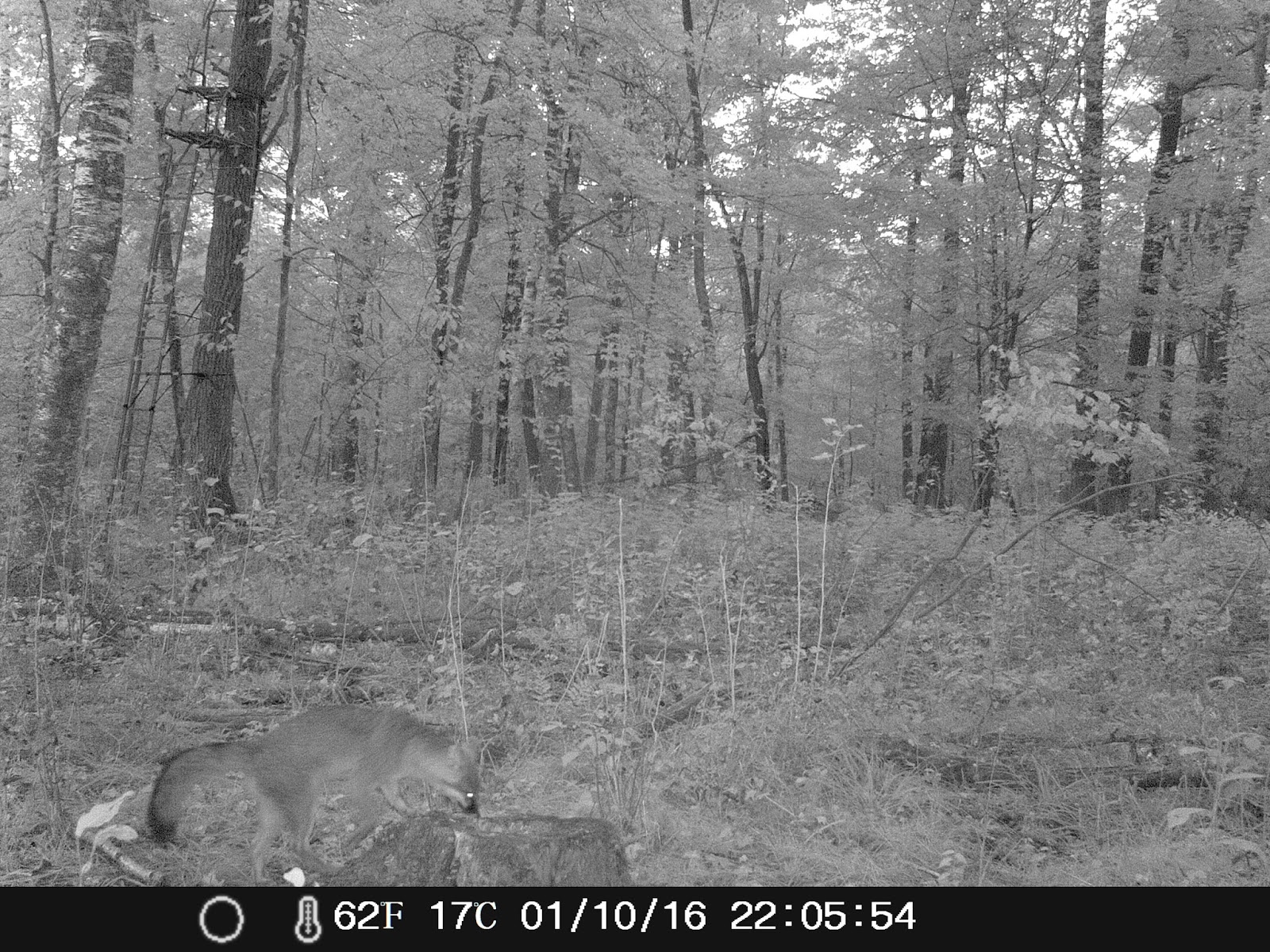
But what other critters actually live in the Foley woods? This fall we set up a trail cam with the hopes of snapping shots of a monster buck before deer season. We were not only satisfied with the amount of deer we saw, but were thrilled to capture activity from raccoons, foxes, squirrels (of course), a coyote, and one of the most photographed critters, a blackbear! Our cam was set not too far off Wolf Trail heading toward the Muck Pond. Let's add the simple statement that these critters are much more terrified of us than we are of them, so have no fear campers!

It is a fantastic thing, knowing we share this magnificient habitat with such amazing critters. Enjoy just a handful of the trail cam shots below, and keep in mind trail cam quality isn't always the best- especially in the dark!

Whitetail Deer


Raccoon


Red Fox


Coyote


Black Bear


BONUS PICS! Taken by the one and only, Dr. Earth. Follow Dr. Earth on Instagram to fully appreciate the beauty of Earth's wildlife. These 3 shots were all taken at camp! 
Grumpy Raccoon

Just a little guy!

We like to call this pose "King Porcupine"


Friday, January 29, 2016

The Bear-Necessities

We all know about the squirrels, woodpeckers, and turtles who inhabit the woods around camp, but
today let us discuss a larger furry friend who also occasionally calls camp home- the black bear.

Found throughout most of the state, Minnesota is the proud home to nearly 20,000 of these big critters! Every couple of years or so we have the privilege of seeing a black bear near Camp’s grounds. Most often, the bear is just passing through, looking for tasty garbage to devour.
Speaking of “tasty” garbage, bears are as far as you can get from being fussy eaters. Aside from scavenging through dumpsters, black bears are herbivores - eating mostly fruitful berries and grasses, but also known to enjoy ants, grubs, and the occasional deer. Bears are attracted to areas with any available food source. This is why bear sightings happen in populated areas- they are simply searching for that next delicious meal. If bears continue to appear in an area you wish they did not, the best way to get rid of the bears is by removing whatever is attracting them. For example, if the bear is frequently knocking over your bird feeder, take the bird feeder away for a period and the bear will likely take your stop off his food route.

The terrain around Foley provides for an ideal natural habitat for black bears, complete with heavily wooded areas for cover and open fields for foraging. With adequate food supplies out in the woods, bears tend to stay clear of our view. Although relatively infrequent, bears do wander close to camp. One summer, a little fella would spend his days high up in the large tree at the top of the marina! Now that is neat! This particular bear never attempted to harm anyone, but remember- black bears are large, wild animals and should not be approached or intentionally aggravated!

If you have a desire to view wild black bears in close proximity, the Foley staff would suggest looking into the Vince Shute WildlifeSanctuary. During late summer/early fall, the black bears are bulking up in preparation for the winter season. Hundreds of black bears come to fill up in a single night, and if you listen closely, you may even here a cub calling out for her mama bear. The cubs hang out up in the trees in the woods and wait for the massive adults to finish feeding before they risk venturing in for a meal of their own.  Visiting this is definitely a memorable experience!

If you are not able to plan a physical trip to northern Minnesota, check out this wildlife webcam of a black bear and her cub at the North American Bear Center in Ely, Minnesota! 

Friday, January 15, 2016

It is so cold the ground is quaking...

A sudden cold spell has graced Foley with its lovely presence. We don't know about your feelings on the cold, but we were sure enjoying the 25°F days that we were fortunate to see during most of December. Then came January.  Frigid temperatures did not come on gradually, it went from nearly 30°F to below zero overnight.

This drastic change in temperature did much more than send frosty chills through all the brave souls
who ventured out of their warm dwellings - it caused some crazy activity to occur beneath our feet and echo throughout the buildings in camp.

Frost quakes or cryoseisms. is a nontectonic, seismic event that may be caused by a sudden cracking action in frozen soil or rock saturated with water or ice.

These frost quakes occur infrequently across the Midwest, New England, and eastern Canada. We are now able to say we have felt this geologic phenomenon here at camp (at least that is what we think they are)! While sitting in the office on a calm Friday we heard a crack and felt the building shake. This occurred again over the weekend, then a third time the next Wednesday. After some research, we narrowed it down to this frost quake concept. Some individuals who have felt a frost quake have described the sounds as “two bowling balls being knocked together,” “a bomb going off,” “gunfire,” “my house is collapsing,” but we would describe our experience as hearing a loud crack and feeling the building give a quick shake- nothing too extreme. All episodes happened very quickly, not lasting more than a couple seconds.


This winter has been full of weather changes. We received some snow early, which melted quickly. Then some rain came through and above average temperatures followed. With this moisture entering the soil and the extreme cold approaching - the ground was being set up perfectly for a frost quake scenario. Once the below zero temperatures arrived, the melted snow and rain that seeped into the earth began to freeze and expand. This expansion ultimately caused the frozen soil and rock to crack underground in a loud, explosive fashion, thus causing the vibration necessary for the buildings to shake. 

Frost quakes are thankfully not known to cause serious damage to buildings, but it was definitely cause for us to do some research to figure out the cause of our buildings shaking! 

Tuesday, November 17, 2015

Ssssome people are ssscared of usss, we are jusssst misssundersssstood...

Salazar, The Classic Corn Snake
Joining our Camp Foley family this past month was a beautiful Motley "Motley" Corn Snake and her best friend, Salazar, a Classic Corn Snake. These two were captive bred around five years ago and are currently around three feet long. Corn snakes are very calm snakes and make wonderful pets.

First, what do Motley and Classic mean? It all comes down to describing the pattern and coloration of the snakes’ scales. There are over 500 different morphs, or variations, of corn snakes. They could have solid, striped, laddered, or circle patterns and any range of colors. Only five of these morphs can be found in the wild, with the other variations caused by cross breeding between morphs. The Classic is the most common to find in the wild. 

As you can see in the picture of Salazar, they are brightly colored and have a ladder type pattern down their back. He also has a white and black checkerboard underside. Motley's variation  was first bred in captivity in 1977. Motleys have a circle pattern down the spine and a white underside. There are many variations of Motley and we believe our snake to be a Normal Motley. She has orange and yellow scales making her pattern resemble a nice sunrise!

Motley, The Motley Corn Snake
Wild corn snakes are native to Southeastern United States, with their largest population being in Florida. Corn snakes are nonvenomous snakes and do not pose any threat to humans. They are actually beneficial to us - they help maintain the rodent population. Their diet consists mainly of mice, rats, and even birds! We feed Motley and Salazar one or two mice once a week. These two can grow up to a length of six feet long and to an age of twenty-three! In the wild, they are likely to live a much shorter life, of around 15 years.


Our resident black rat snake, Lucy, who is native to Minnesota, was thrilled to welcome our new friends. Corn snakes are close relatives to black rat snakes and are also known as red rat snakes! Motley and Salazar have adjusted well to life at summer camp and cannot wait to meet all of the students and campers who come visit! 

Wednesday, October 14, 2015

Find a porcupine, pick it up. All day you'll have good luck.

According to the Minnesota DNR, “the porcupine is one of the most interesting and unusual wildlife up to 30,000 sharp quills definitely makes them a bit unusual. Let us have a look to see what else makes these little critters so unique.

Porcupines are a special rodent. One, they are the second largest rodent in the United States, just behind the beaver. Second, along with having quills for constant protection, a porcupine also has a built in antibiotic. This adaptation has come from porcupines being mildly clumsy and often falling out of trees while reaching for a snack, thus quilling themselves. If a porcupine quills himself he is not at risk of infection due to this awesome, built in antibiotic. Not only do the porcupines use quills as a defense, they first let off a strong odor, similar to a human’s body odor, which makes them less appealing their predators.

Porcupines only have a few predators. Most animals would prefer to avoid a face full of quills, but the most common predator, the fisher, has literally found a way around that. A fisher is part of the weasel family and they are very quick. They are able to get around the porcupines threatening tale, to get to the face and eventually the quill-less belly of the porcupine. Other predators include mountain lions, eagles, wolves, and great-horned owls.

Due to having a solid defense system, porcupines are able to live on their own because they do not need a “pack” to help protect them. They do not hibernate but stay near their dens during the winter months and venture further away during warmer months.  When a female is ready to mate, she climbs to the top of a tree and lets out a loud “scream,” which lets the male know he is able to waddle on over to her tree. The female will give birth to one little porculette whose quills are only soft for a couple hours after birth!

The pictures above are from a large porcupine we have had hanging out around the Muck Pond.

FACTS:
Porcupines lifespan: around 15-18 but have lived to 30
Porcupines are near-sighted and slow moving
Porcupines can weight up to 30 pounds
Main diet: stems, roots, berries…but snack on log cabins and outhouses
One of three species (wolverine, skunk) that has white and black on their bodies. Only animals that benefit from letting other animals know where they are at night.

Monday, June 3, 2013

Camp Creature: Fisher

Let's start this off by clearing a few things up. The fisher (sometimes called the fisher cat) does not eat fish, nor is it a feline. So, we've already confused a whole lot of people just by introducing this creatures name. The name comes from colonial Dutch fisse or visse do to it's resemblance to the European polecat. In French, the pelt of a polecat is called fiche or fichet. It is sometimes called the fisher cat for unknown reasons, but it is comparable in size to a domestic cat, so maybe that's it?

The fisher is a member of the weasel family and resembles a very large mink. Adult fishers are 24 to 40 inches long including their long, bushy tail. Females weigh six to eight pounds, and males can weigh up to 18 pounds. Fishers are very agile and active predators. It is an excellent tree climber. Some of its favorite foods are mice, squirrel and porcupine and it shows a preference for snowshoe hare. If you read about the bobcat, the Camp Creature a few weeks ago, this diet will seem familiar you. Bobcats and fishers share the same habitat and eat the same foods, leading to some conflict between the two animals.

The fisher's fur changes with the seasons, and males have coarser coats than females. It ranges from deep brown to black, and the coat appears darker in the winter contrasted against the white snow. Its coat is dense and glossy in the early winter, and in the summer, the fur color is lighter. In late summer fishers undergo moulting. The underside of the fisher is almost completely brown with some patches of white fur. The face and shoulders can be a silvery gold. The fisher has retractable claws, and its feet are disproportionately larger than its legs so that it can move on top of snow. Fishers have extremely mobile ankle joints, which can rotate their back paws almost 180 degrees. This allows it to move through tree branches and climb down trees head first!

Fisher kits (babies)! How adorable are they?
Fishers live in a variety of forest types in northern Minnesota and are sometimes found in western and south eastern Minnesota. It is a fairly solitary creature aside from breeding season and when the young are with their mother. Fisher fun fact: Female fishers are pregnant for 350 days of each year! Yikes!

In the early 1900s, fishers were nearly extinct in Minnesota. In the early 1900s, fisher fur was very valuable and thus became popular with trappers. The highest-quality furs are from the winter trapping season, and the fisher is easily trapped. In the 1920s and 1930s, the average price for a fisher pelt was $100 US, which is about $1,000 today. Since the late 1970s, the population in Minnesota has remained at more than 10,000, which is enough to support a regulated trapping harvest of about 2,000 each year. The price of fisher fur has greatly declined due though, so trappers are definitely not raking in the big bucks.


. 

Monday, May 20, 2013

Camp Creature: The Bobcat

This week we'll be introducing you to the bobcat! An "illusive" creature as Camp Foley's Director, Alli Faricy, put it. According to the Minnesota Department of Natural Resources (DNR), "Few humans ever see a bobcat in the wild."

The bobcat is the smallest of of all four species in the Lynx genus. Bobcats can weigh between 10 and 40 pounds, and stands one to two feet tall. Generally, it is tan to grayish-brown on top with a white belly and it has
black streaks or spots. The ears of the bobcat are black-tipped and pointed, with short, black tufts.

First bobcat fun fact: Bobcats from desert regions of the southwest have the lightest fur, and the northern bobcats from the forest regions have the darkest! 

Bobcats have excellent hearing and vision, and a good sense of smell. Plus, it is an excellent climber (they have been known to climb trees and catch and eat porcupines!) and can swim (but tends to avoid water)! The bobcat is muscular, and its hind legs are longer than its front legs, which gives it a bobbing walk. However, this is not why the animal is named the bobcat...

Second bobcat fun fact: Bobcats are named for its "bob" tail, which looks as though it has been cut off at about five inches long!

Bobcats eat a wide range of small and medium-sized prey such as mice, snowshoe hares, squirrels, birds and white-tailed deer fawns. The bobcat needs to watch out for coyotes and fishers, but fishers and coyotes should also beware of the bobcat.

Bobcats used to live across the state, but now it is seldom found in southern Minnesota. It most commonly lives in the woodlands of north-central and northeastern Minnesota. Bobcats are a designated game animal, meaning they can be hunted, but only during the prescribed seasons. It is typically hunted - with hounds - for its fur. 

In a Shawnee tale, the bobcat is outwitted by a rabbit, thus resulting in the bobcat getting its spots. After trapping the rabbit in a tree, the bobcat is persuaded to build a fire. The embers then scatter on its fur, leaving it singed with black spots. The bobcat, lynx and coyote are present in a lot of Native American Mythology and national folklore. 

Final bobcat fun fact: The bobcat we see in the western Great Lakes area (including upper Michigan, Wisconsin, Southern Ontario and Minnesota) is the L. r. superiorensis. It is one of thirteen bobcat species.