
Today we are taking a look at the many different kinds of Boats we've had here at Camp. The Marina has been home to lots of different water crafts, and I think you'll be surprised to see the variety of boats we've had here at Foley!
1930s
Starting out with the firs available photos we have in our archives in the 30s! Some of the boats seen at camp will be familiar, but many will notice that many other are missing. At Camp St. Thomas (the original name for Camp Foley) when Father Foley was running it, the boy campers had access to canoes made of wood! They sailed these canoes on windy days with special sails. One of the only boats with a motor seen around camp was the Mail Boat! This boat brought mail to the campers every week from the closest post office that was across the lake.
 |
| The boys canoeing |
 |
| A canoe with a sail |
 |
| The Mail Boat! |
1940s
As we transition into the 40s at Camp Foley a few changes in the boats happen. Camp still has the canoes and this is still a very popular activity. We see the first sail boats in camp in 1946. In 1949 we see the purchase of a brand new boat with a round bottom. It was called a motorcraft but the campers would also many times use paddles to navigate the boat through more shallow water as well. Its the 50s when major changes start to take place!

1950s

 |
| Camp's Motorcraft |
Welcome to the 50s and the start of waterskiing! Camp acquires its first ski boat, a green and white Glasspar. It only had a 30 horse power motor, compare that to today with the 345 horse power motor we have on the Moomba! Camp also has row boats the campers take out to go fishing, and it's canoe and sailing programs are still going strong. Right on the cusp on 1960 camp also purchased 34 foot houseboat. It was custom built to accommodate an entire cabin and its counselors. It had a 40 horse power motor and pontoon hull, which means it could go faster than our ski boat!
 |
| Campers fishing in a Rowboat |
 |
| The Camp Houseboat |
 |
| The old dock set up at the Marina |

1960s
We have arrived in the 60s and things are getting updated! In 1960, nameplates for all the watercrafts are purchased, allowing campers to identify all the boats by name. In 1962, 6 years after the purchase of the fisrt ski boat, camp trades in the Glasspar for a 14 foot Larson Playmate. And just 3 years later camp adds a second ski boat to the Marina with the purchase of a Evinrude Ski Lark boat. It cost $2,165.00, and had 75 horse power motor, our fastest boat yet! Also in 1965, two new 9 ½ hp Johnson motors replace the two old motors that have been in use for 8 years on the large 18 foot boats Camp used in tripping and for fishing. And then in 1969, camp beefs up the Larson Ski Boat with a new 55 hp motor to replace the 40 hp motor.

We have arrived in the 60s and things are getting updated! In 1960, nameplates for all the watercrafts are purchased, allowing campers to identify all the boats by name. In 1962, 6 years after the purchase of the fisrt ski boat, camp trades in the Glasspar for a 14 foot Larson Playmate. And just 3 years later camp adds a second ski boat to the Marina with the purchase of a Evinrude Ski Lark boat. It cost $2,165.00, and had 75 horse power motor, our fastest boat yet! Also in 1965, two new 9 ½ hp Johnson motors replace the two old motors that have been in use for 8 years on the large 18 foot boats Camp used in tripping and for fishing. And then in 1969, camp beefs up the Larson Ski Boat with a new 55 hp motor to replace the 40 hp motor.

 |
| The Evinrude Ski Lark |
 |
| The Larson Playmate |
 |
| The Houseboat with its Nameplate "Voyager" |
1970s
The 70s bring lots of exciting things, but as I always say, the most exciting thing is girl campers! Girls can now be seen on all the different watercrafts around camp. In 1971, camp buys a new Glastron tri-hull Sportster ski boat with an 85 horse power Evinrude motor. This is the fastest boat at camp so far. Interesting to note that in 1972 the Minnesota Life Jacket Law goes into effect, this law requires one U.S. Coast Guard approved, properly sized, and easily accessible life jacket for each person on the boat. All children under ten are required to wear an approved life jacket at all times while in a boat. Camp starts asking campers to bring their own life jacket to camp with them, and Camp sells life jackets in canteen for $6 a piece.
1980s
Things start to look more familiar as we enter the 80s. We can see aluminum safety boats that kids can be seen riding in. Sailing and Canoeing are still just as popular. Skiing gets a slight makeover with the purchase of a new ski boat that replaces the slowest of the two already at Camp Foley.
The 70s bring lots of exciting things, but as I always say, the most exciting thing is girl campers! Girls can now be seen on all the different watercrafts around camp. In 1971, camp buys a new Glastron tri-hull Sportster ski boat with an 85 horse power Evinrude motor. This is the fastest boat at camp so far. Interesting to note that in 1972 the Minnesota Life Jacket Law goes into effect, this law requires one U.S. Coast Guard approved, properly sized, and easily accessible life jacket for each person on the boat. All children under ten are required to wear an approved life jacket at all times while in a boat. Camp starts asking campers to bring their own life jacket to camp with them, and Camp sells life jackets in canteen for $6 a piece.
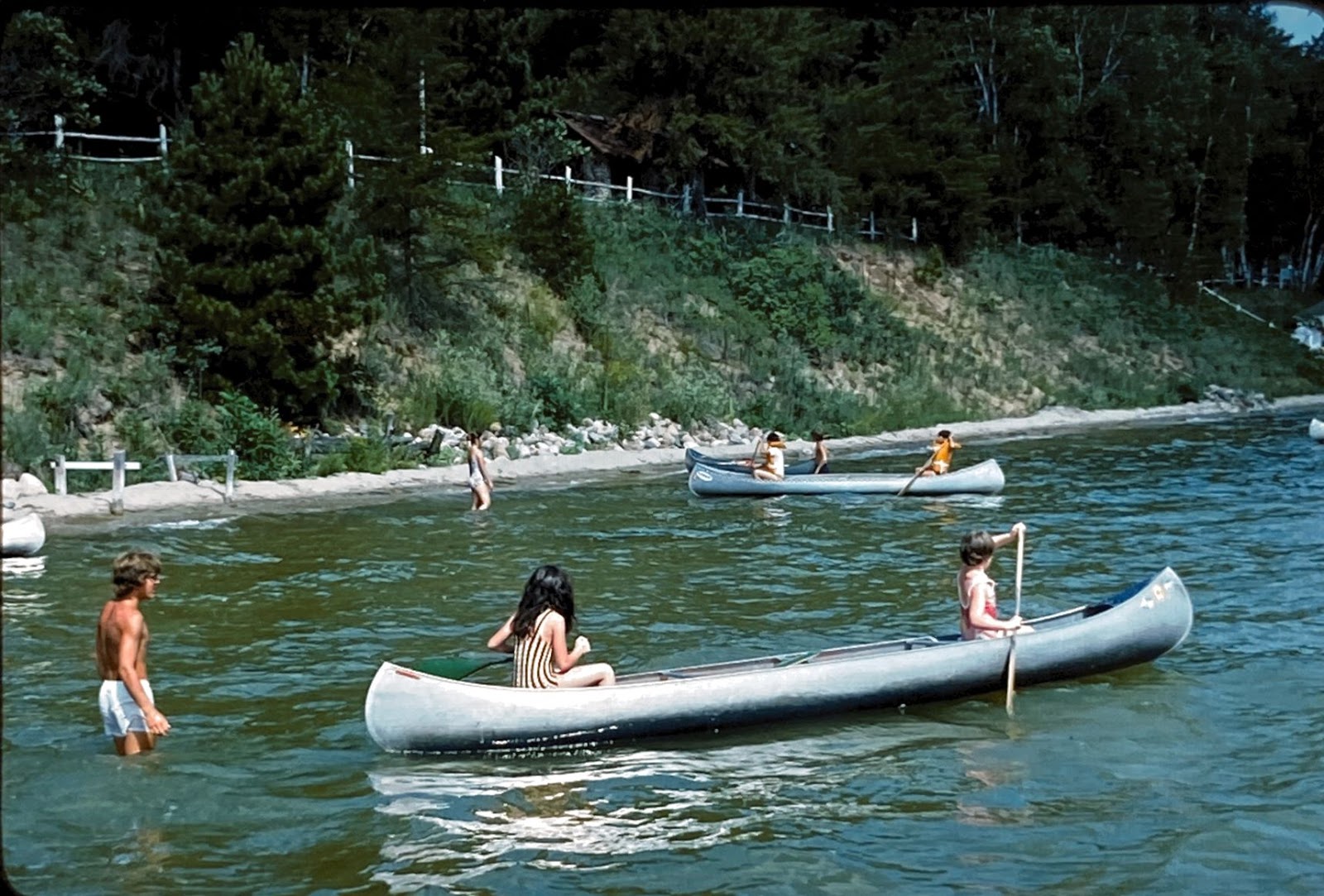 |
| Girls and Boys Canoeing |
 |
| Girls on a Sailboat |
 |
| The fastest ski boat yet! |
1980s
Things start to look more familiar as we enter the 80s. We can see aluminum safety boats that kids can be seen riding in. Sailing and Canoeing are still just as popular. Skiing gets a slight makeover with the purchase of a new ski boat that replaces the slowest of the two already at Camp Foley.
 |
| Campers doing a "Canoe over Canoe" Rescue |
 |
| A new Aluminum Safety Boat |
 |
| Possibly the Firefox Sailboat |
 |
| New Ski Boats in the 80s |
1990s
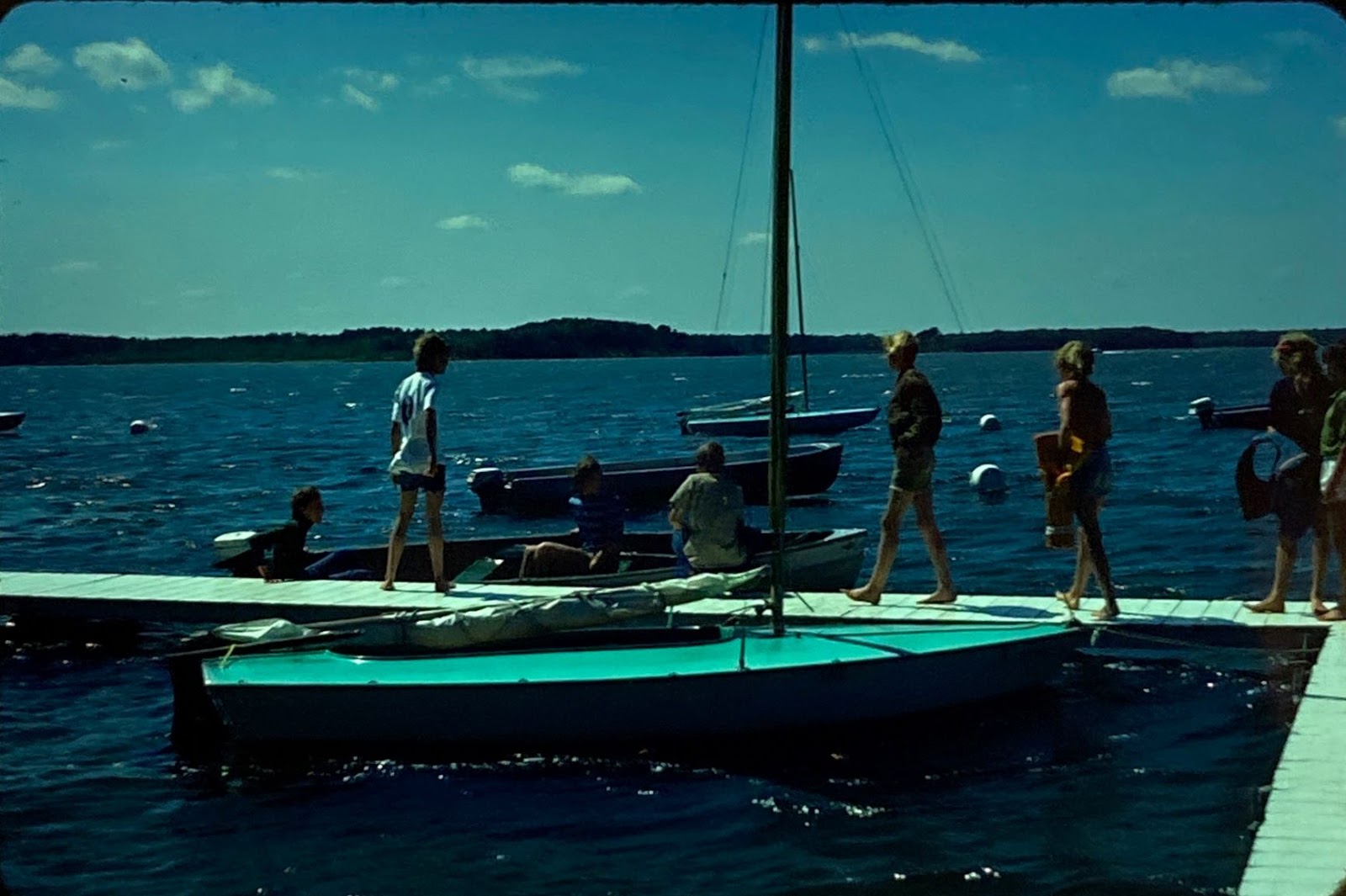
We made it to the 90s where some new things are added and upgraded. A new pontoon boat is purchased to use for fishing and other special programs. In 1993, two plastic kayaks are purchased, starting the program that would someday evolve into paddle mania. The activities start to become much more familiar to us and the boats reflect that.

 |


 |
| Playaks are added to the Swimdock |
2000s
We have entered the new decade and with comes a few changes to our boats here at Camp Foley. In 2000 Camp purchased a 16 foot long aluminum boat that the kids could take out and enjoy, and 12 new playaks and paddles were added to the swim dock. In 2001, a new dock system was put into place down at the Marina. this would be the dock system that is still used today. 2002 was the year that the two giant blue paddle boats were added to the Swim Dock and Paddlemanie. It would seat up to four kids and they could peddle like on bikes around the lake. A new ski boat was purchased in 2004, along with the Mango Sail boats, a smaller alternative to the big 420 sail boats the older kids used. And to the delight of many counselors and Alli our director, 5 new safety boats joined the Foley Boat family in 2007.
 |
| The Mango Sailboats and some Windsurfers |
 |
| A new Safety Boat |
 |
| New and Improved Dock System |
 |
| First ever picture of the blue paddle boats! |
We have finally arrived at the end of our journey and we can see how far the boats at Camp Foley really have come! The last few changes take place in this decade and its amazing to see how far the technology of boats has changed over the years. Our Pontoon was refurbished with new upholstery in 2011. We say goodbye to the Mangos in 2013 and they are replaced with the amazing Bic Sail boats. A boat specifically for wakeboarding and wakesurfing is purchased in 2012, this is the Centurion. Despite its makeover the pontoon is replaced altogether in 2016 and is still here in 2020. Also in 2016 the famous Moomba joins Camp Foley and is a favorite ski/wakeboard boat among campers.
 |
| The New Pontoon |

 |
| Modern Camp Foley Marina Layout |
 |
| The Bics! |
 |
| The Moomba Boat |


